
2026-09-09 · Connie Pacheco
Why Furnaces Short-Cycle During Cold Snaps in Delta County
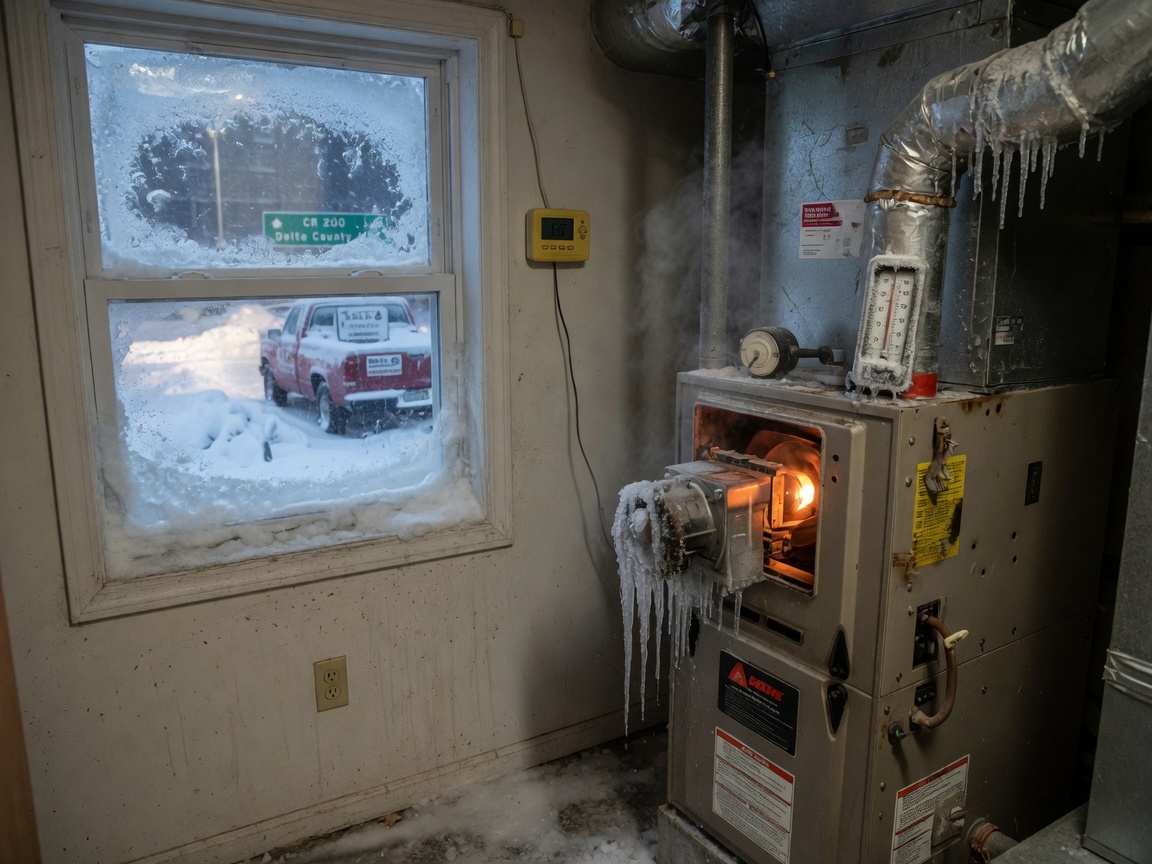
In Delta County's high desert valley climate, furnaces short-cycle during cold snaps primarily because restricted airflow or a dirty filter causes the heat exchanger to overheat and trigger safety shutdowns after just 5-10 minutes instead of running full 15-20 minute cycles. This pattern repeats as the system tries to meet demand when temperatures drop sharply overnight. Homes in Downtown Delta and nearby Cedaredge face this more often due to the valley's temperature swings and the age of local housing stock, where older ductwork collects dust during hot summers and then restricts flow once winter hits.
Airflow Restrictions Common in Delta's Winter Conditions
High desert valley winds carry fine dust and pollen that builds up in return vents and filters faster than in milder climates. Once winter arrives with its cold snaps, this debris reduces airflow enough to trip the limit switch on many furnaces serving homes in Downtown Delta. Residents in Orchard City report similar patterns when systems pull in extra particulates from agricultural surroundings. Checking and replacing filters every 30-45 days during the heating season prevents most of these shutdowns. Proper airflow also protects the heat exchanger from cracking under repeated short bursts of operation.
How Cold Snaps Interact with Local Housing Stock
Many homes around the Delta County Museum and Confluence Park date back decades with original or minimally updated duct systems that were never sized for modern high-efficiency furnaces. When a sudden cold snap hits, the furnace runs harder to compensate for heat loss through older windows and insulation. This extra demand combined with any existing restriction pushes the system into short-cycle mode within the first hour of operation. The terrain in the valley traps colder air near the ground, extending the duration of these snaps and increasing wear on components. Homeowners who inspect ducts annually catch collapsed or disconnected sections before they cause repeated shutdowns.
Thermostat Placement and Control Problems
Thermostats installed near south-facing windows or in hallways that warm quickly during the day can send false signals during Delta's variable winter days. The furnace starts, heats the immediate space, then shuts off before the rest of the house reaches temperature. This on-off pattern repeats through the night when temperatures fall fastest. Upgrading to a properly located thermostat or adding zoning helps stabilize cycles. In rural stretches between Delta and Cedaredge, power fluctuations during storms can also reset controls and create erratic short-cycling until the system is recalibrated.
Practical Steps Before Calling for Furnace Repair
Start by confirming the filter is clean and all supply vents are open and unobstructed. Next, listen for the blower continuing to run after the burners shut off; if it stops too soon, airflow is likely the culprit. Note how long each cycle lasts and whether the issue began right after the first hard freeze. These details help a technician diagnose faster. For persistent short-cycling, schedule heating maintenance through a local furnace service specialist familiar with Delta County conditions rather than waiting for a full breakdown during the next cold snap. Regular attention to filters and ducts keeps systems running through the season without repeated interruptions.